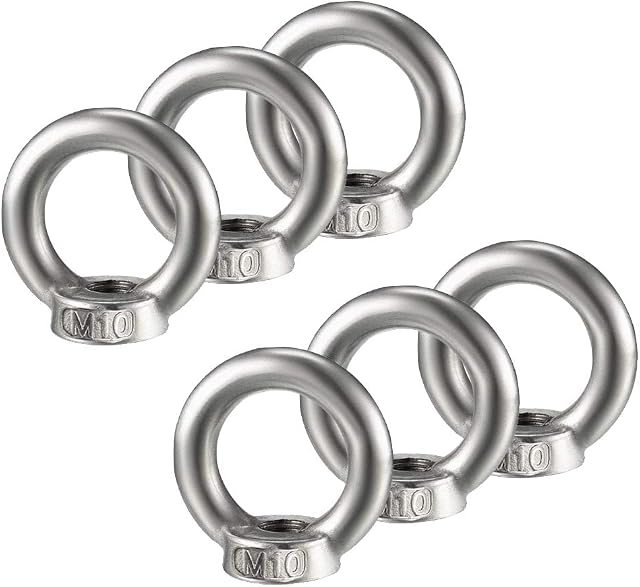
Eye Nuts
Shop Eye Nuts products from multiple suppliers.


About Eye Nuts
Eye Nuts: A Versatile Fastener for Various Applications
When it comes to fasteners, eye nuts are often overlooked in favor of more common options like screws and bolts. However, eye nuts have their own unique set of advantages and applications that make them a valuable addition to any toolbox. In this blog post, we will explore the world of eye nuts, their different variations, and the various ways they can be used.
Eye nuts, as the name suggests, are nuts with a loop or eyelet attached to them. This eyelet allows for easy attachment of ropes, cables, and other hardware, making them ideal for lifting and hanging applications. What sets eye nuts apart from other fasteners is their versatility and ease of use. With just a simple twist, an eye nut can be securely attached to various surfaces, providing a strong and reliable connection.
One of the most common uses for eye nuts is in the construction industry. They are widely used for lifting heavy objects, such as beams and machinery. The loop of the eye nut provides a convenient point of attachment for lifting equipment, allowing for safe and efficient lifting operations. Additionally, eye nuts are often used in conjunction with chains and hooks to create a lifting system that can handle even the heaviest loads.
Eye nuts are not limited to just construction applications, though. They are also commonly used in the automotive industry for securing cargo and equipment. The loop of the eye nut can be easily attached to a tie-down strap or rope, providing a secure anchor point for securing items in trucks, trailers, and other vehicles. This makes eye nuts an essential tool for anyone who frequently transports goods or equipment.
In addition to their industrial applications, eye nuts are also popular in the world of interior design and decoration. The loop of the eye nut can be easily attached to hooks or screws, allowing for the hanging of chandeliers, pendant lights, and other decorative fixtures. The availability of eye nuts in different finishes, such as brass and stainless steel, makes it easy to find a style that matches the aesthetic of any space.
Speaking of different finishes, eye nuts come in a wide range of materials and sizes to suit various needs. For example, stainless steel eye nuts are highly durable and resistant to corrosion, making them ideal for outdoor applications or environments with high moisture levels. On the other hand, brass eye nuts offer a more decorative and vintage look, making them a popular choice for interior design projects.
When selecting an eye nut, it's important to consider the load capacity and thread size. Eye nuts typically come with a maximum load capacity specified by the manufacturer. It is crucial to choose an eye nut that can safely support the intended load to ensure the safety of both people and property. Additionally, eye nuts come in different thread sizes, ranging from M5 to M10, allowing for compatibility with various types of hardware.
To give you a better idea of the different options available, let's take a look at some specific examples of eye nuts. In the category of eye nuts, there are several products worth mentioning. For instance, there is a pack of 12 ring lifting eye nuts made of 304 stainless steel, which provides excellent corrosion resistance. Another example is a pack of 5 eye nuts with a brass tone finish, perfect for adding a touch of elegance to your hanging lamps or chandeliers. Additionally, there are eye nuts made of marine-grade stainless steel, ensuring their durability even in harsh environments.
In conclusion, eye nuts are a versatile and reliable fastener with a wide range of applications. Whether you need to lift heavy objects, secure cargo, or hang decorative fixtures, eye nuts can provide a secure and convenient solution. With different materials, sizes, and finishes available, it's easy to find an eye nut that matches your specific needs. So next time you're in need of a fastener, don't overlook the humble eye nut - it just might be the perfect tool for the job.