4% OFF
Shop Tubes products from multiple suppliers.


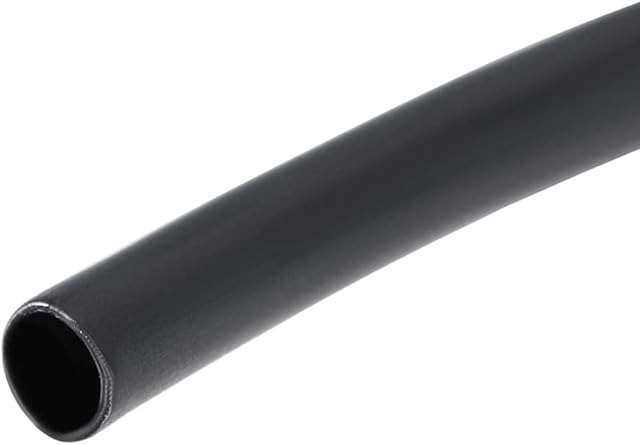


When it comes to electric circuits, there are many components that play a crucial role in their functioning. Among these components, tubes have gained significant attention due to their versatility and wide range of applications. In this blog post, we will delve into the world of tubes and explore what they are, how they work, and their uses in electric circuits.
What are Tubes?
Tubes are essentially metal or glass cylinders that are used to carry electrical current from one point to another. They are also known as vacuum tubes or thermionic valves due to the way they generate an electric current through a process called thermionics. The basic structure of a tube consists of a cathode, an anode, and a grid between them. When an electrical potential is applied across the electrodes, electrons are emitted from the cathode and accelerated towards the anode by an electric field.
How Do Tubes Work?
The working principle of tubes can be explained through a simple analogy - think of a tube as a wind instrument. When you blow into a mouthpiece, the air molecules collide with each other, creating a vibration that propagates through the instrument and produces sound waves. Similarly, when an electrical potential is applied across the electrodes in a tube, it creates a flow of electrons that travels through the tube, carrying energy from one point to another.
Types of Tubes:
There are several types of tubes available, each with its unique characteristics and applications. Some common types include:
* Diodes - These are used for rectification purposes, converting AC power into DC power. They have two electrodes and allow current to flow in only one direction.
* Triacs - These are similar to diodes but can handle higher currents and voltages. They also have three terminals, enabling them to control the flow of current.
* Thyristors - These are unidirectional devices that can be used for switching applications. They can conduct current in only one direction and are often used as power switches or motor starters.
Uses of Tubes:
Tubes have a wide range of applications in electric circuits, including:
* Power amplifiers - Tubes are commonly used in audio amplifiers to increase the amplitude of an electrical signal. They can also be used for radio transmitters and receivers.
* Switching devices - As mentioned earlier, thyristors are often used as power switches or motor starters due to their unidirectional conductivity.
* Rectification - Diodes are commonly used for rectifying AC power into DC power in applications such as power supplies and voltage regulators.
In conclusion, tubes play a crucial role in electric circuits, offering versatility and wide-ranging applications. From amplifying signals to switching devices, their unique properties make them an essential component in many electronic systems. As technology continues to evolve, it will be interesting to see how tubes adapt and innovate to meet the demands of modern electronics.
More listings from Tubes by experienced suppliers.