Control Valves
Shop Control Valves products from multiple suppliers.

About Control Valves
Control valves are essential components in many industrial systems, as they play a crucial role in regulating the flow of fluids or gases. These valves are used to control the pressure, temperature, and flow rate of a fluid, ensuring the smooth operation of the system.
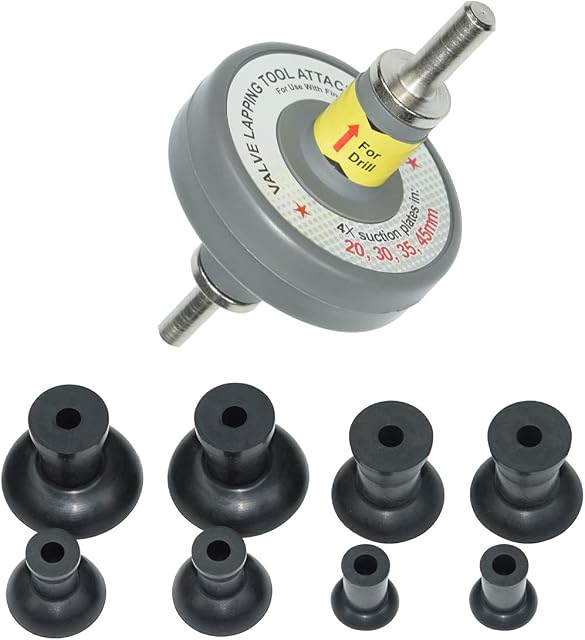
One popular example of a control valve is the CNWOOAIVE Valve Lapping Tool Attachment Kit Valve Lapper for Drill Valve Grinding Small Engine. This innovative tool is designed to make valve grinding and lapping tasks easier and more efficient, especially for small engines. With this kit, you can easily attach the valve lapping tool to your drill, allowing for quick and accurate valve grinding.
But what exactly are control valves, and why are they important? Let's delve deeper into this topic.
Control valves are devices that regulate the flow of fluids or gases in a system. They work by opening, closing, or partially obstructing the flow path, depending on the desired control parameters. These valves are typically operated by an actuator, which can be pneumatic, hydraulic, or electric.
There are various types of control valves, each designed for specific applications. Some common types include globe valves, ball valves, butterfly valves, and plug valves. Each type has its own advantages and limitations, making it suitable for different operating conditions.
One of the key functions of control valves is to control the flow rate of a fluid or gas. By adjusting the valve opening, the flow rate can be increased or decreased, allowing for precise control of the system. This is particularly important in processes where maintaining a specific flow rate is critical, such as in chemical manufacturing or water treatment plants.
Control valves are also used to control the pressure within a system. By adjusting the valve opening, the pressure can be maintained at a desired level, preventing any damage or malfunctioning of the equipment. For example, in a steam system, control valves are used to regulate the pressure of the steam to ensure safe and efficient operation.
Another important function of control valves is temperature control. By adjusting the valve opening, the amount of heat transfer can be regulated, helping to maintain a desired temperature within the system. This is crucial in industries such as HVAC (heating, ventilation, and air conditioning), where precise temperature control is necessary for comfort and energy efficiency.
In addition to these primary functions, control valves can also be used for other purposes, such as flow isolation and diversion. Some valves are designed to completely shut off the flow when needed, while others can redirect the flow to different paths within the system.
Choosing the right control valve for your application is essential to ensure optimal performance and efficiency. Factors such as the type of fluid or gas, operating conditions, and control requirements need to be considered. It is also important to select a valve that is compatible with the actuator and other components of the system.
When it comes to valve grinding and maintenance, tools like the CNWOOAIVE Valve Lapping Tool Attachment Kit Valve Lapper for Drill Valve Grinding Small Engine can be a valuable addition to your toolkit. These tools make the task of valve grinding easier, saving time and effort. With the ability to attach the lapping tool to a drill, you can achieve a smooth and accurate surface on the valve, ensuring optimal performance.
In conclusion, control valves are essential components in many industrial systems. They play a critical role in regulating the flow, pressure, and temperature of fluids or gases, ensuring the smooth operation of the system. The CNWOOAIVE Valve Lapping Tool Attachment Kit Valve Lapper for Drill Valve Grinding Small Engine is an example of an innovative tool that can make valve grinding tasks easier and more efficient. So, whether you're working with small engines or large industrial systems, control valves and the right tools can help ensure optimal performance and efficiency.