
Djembes
Shop Djembes products from multiple suppliers.
About Djembes
Djembes: The Rhythmic Heartbeat of African Music
When it comes to African percussion instruments, one name stands out above all others - the djembe. This hand drum, with its rich history and distinctive sound, has captivated audiences around the world. In this blog post, we will explore the origins, construction, and cultural significance of djembes, as well as the different types available in the market today.
The djembe, pronounced "jem-bay," originated in West Africa, specifically in the Malinke tribes of Guinea, Mali, and Ivory Coast. Its name translates to "everyone gather together in peace," reflecting the drum's traditional role as a unifying force within the community. Used in various ceremonies, celebrations, and rituals, the djembe has long been considered the heartbeat of African music.
Traditionally, djembes were carved from a single piece of hardwood, such as mahogany or lenke. The drum's body is shaped like a goblet, with a wide bottom and a narrow top. The drumhead, traditionally made from goat skin, is stretched tightly over the top using a system of ropes and rings. This rope tuning mechanism allows the player to adjust the tension of the drumhead, thus altering the pitch and tone of the drum.
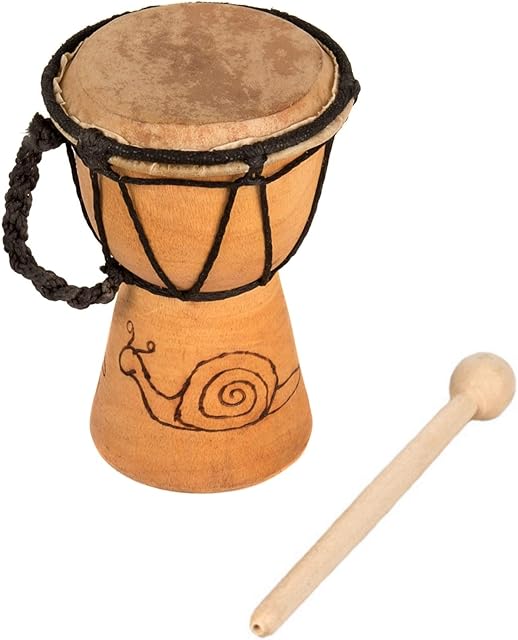
In recent years, the popularity of djembes has spread beyond Africa, leading to the creation of different types of djembes to cater to diverse musical styles and preferences. One example is the 15cm Children's African Djembe Drum made with Hand Carved Mahogany. This smaller-sized djembe is perfect for young aspiring musicians, allowing them to develop their rhythm and coordination skills. With a 3" diameter and a free drumstick included, this djembe is not only educational but also fun for kids to play.
Another example is the A-Star 5 Inch Painted Colourful West African Djembe Drum. This authentic handmade djembe is not only a musical instrument but also a work of art. Its vibrant colors and intricate designs add visual appeal, making it a great addition to any home or classroom. With a height of 25 cm, this djembe is suitable for both children and adults, providing endless hours of musical enjoyment.
Whether you choose a traditional or modern design, playing the djembe offers numerous benefits. First and foremost, it is a great way to express oneself creatively. The rhythmic patterns produced by the djembe can be both soothing and energizing, allowing individuals to release stress and connect with their inner selves. Moreover, playing the djembe involves not only the hands but also the whole body, promoting physical coordination and motor skills.
Aside from its individual benefits, the djembe also holds cultural significance. In African societies, the drum serves as a means of communication, conveying messages and stories through its beats. It is often used during social gatherings, ceremonies, and rituals, bringing people together and fostering a sense of community. By embracing the djembe, individuals can gain a deeper understanding and appreciation for African culture and traditions.
When purchasing a djembe, it is important to consider the quality and craftsmanship of the instrument. Handmade djembes, like the ones mentioned earlier, are often preferred for their authenticity and superior sound quality. Additionally, the type of wood used for the body and the quality of the drumhead can greatly impact the overall sound and durability of the instrument.
Taking care of your djembe is also essential to ensure its longevity. Proper storage, regular cleaning, and occasional re-tuning are crucial to maintain the drum's optimal performance. Additionally, it is recommended to keep the drum in a cool and dry place, away from direct sunlight and extreme temperatures, to prevent any damage.
In conclusion, djembes are more than just musical instruments - they are cultural icons that embody the spirit of African music and traditions. Whether you are a professional musician or a beginner, playing the djembe can be a transformative experience, connecting you to a rich heritage and allowing you to express yourself in a unique and powerful way. So why not embrace the rhythmic heartbeat of Africa and embark on a musical journey with the djembe?